Understanding R-Value and U-Value in High-Performance Homes
Why whole-element performance matters more than individual materials
When people compare insulation options, the conversation usually centres on R-values. Higher is assumed to be better. The comparison feels simple and objective.
In practice, comfort, energy efficiency and real-world performance are not determined by single materials in isolation. They are shaped by how an entire building envelope behaves once it is assembled, penetrated and exposed to real conditions.
That is where U-values matter, and why relying on R-values alone often leads to disappointing outcomes, even in new homes.
What R-value actually tells you
R-value measures thermal resistance. In simple terms, it describes how well a material resists heat flow. A higher R-value means that specific material slows heat transfer more effectively.
R-values are useful for comparing like-for-like products such as insulation batts or rigid boards. They help answer narrow questions about material performance under controlled conditions.
What they do not describe is how a wall, roof or window performs once it becomes part of a building.
They do not account for:
- framing and fixings
- junctions between elements
- penetrations and services
- real heat flow paths through assemblies
That distinction matters.
For a grounding in how heat actually moves through buildings, see Building Physics Made Simple.
Why U-value is the more useful metric
U-value measures thermal transmittance. It describes how much heat flows through a complete building element such as a wall, roof or window.
Lower U-values mean less heat transfer and better overall performance.
Unlike R-values, U-values account for:
- all layers in an assembly
- framing and fixings
- internal and external air films
- thermal bridges
- real-world heat flow paths
This is why U-values are used in Passivhaus (Passive House) design and energy modelling. They describe how an assembled element actually performs, not how a single material behaves in isolation.
A wall can contain high-R-value insulation and still perform poorly if heat is able to bypass that insulation through framing or junctions.
Why this matters for comfort
Comfort is not determined by air temperature alone. It is strongly influenced by internal surface temperatures.
Cold internal surfaces in winter draw heat from occupants through radiation. In summer, overheated surfaces radiate heat back into the space. Both lead to discomfort, even when thermostats suggest conditions are acceptable.
U-values directly influence these surface temperatures. Lower U-values help keep internal surfaces closer to room temperature year-round, reducing radiant discomfort and improving perceived comfort.
This is one of the reasons high-performance homes feel calm and stable rather than drafty or uneven.
Windows are the clearest example
Windows illustrate the difference between R-values and U-values more clearly than any other element.
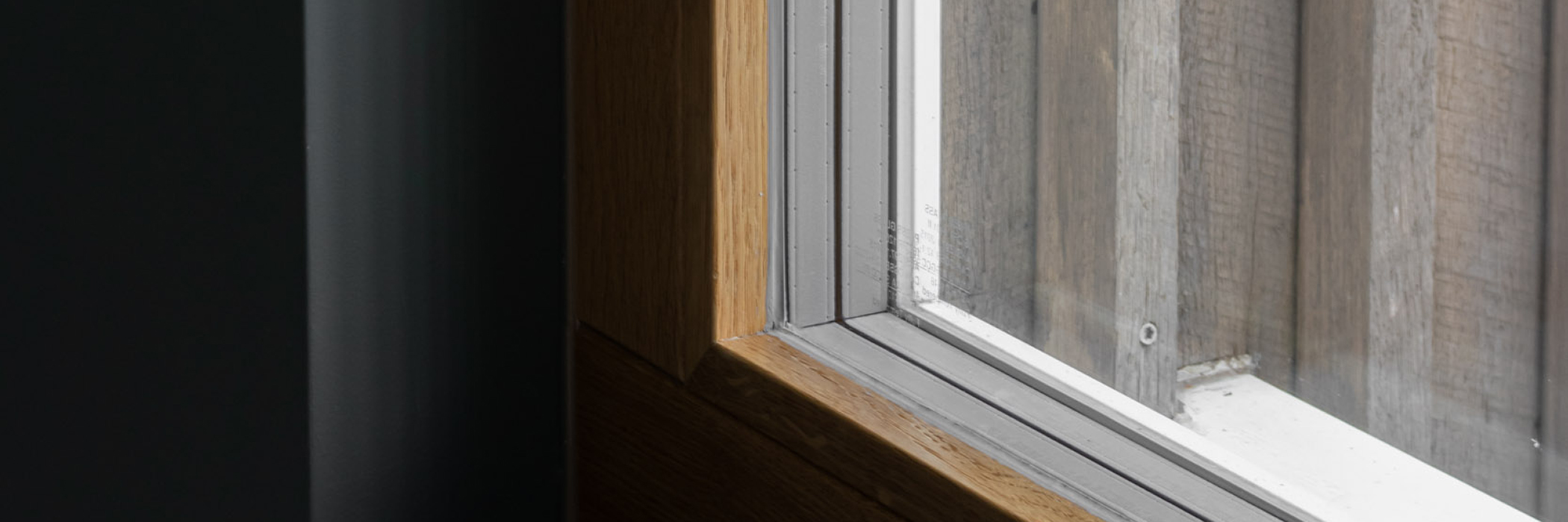
A glazing unit may have a reasonable centre-of-glass R-value. Once frames, spacers and installation details are included, overall performance can drop significantly.
U-values capture the full picture. They describe the thermal performance of the entire window, not just the glass.
This is why Passivhaus places strict limits on window U-values and pays close attention to installation detailing, rather than relying on isolated material claims.
Thermal bridging changes everything
Heat always follows the path of least resistance. Wherever insulation is interrupted by structure or poor detailing, heat flows more easily.
These weak points are known as thermal bridges. They can significantly reduce performance, increase energy use and create cold internal surfaces that increase condensation and mould risk.
R-values alone cannot capture this effect. U-values and thermal bridge modelling can.
High-performance construction limits thermal bridging through continuous insulation, careful junction detailing and system-level thinking.
Why code compliance often falls short
Building codes and marketing material tend to focus on minimum R-values because they are easy to specify and simple to communicate.
Minimum compliance, however, does not guarantee comfort, low energy use or durability. It often produces buildings that meet requirements on paper but perform inconsistently in use.
This gap between compliance and outcomes is explored further in Why 7-Star Energy Efficient Isn’t the Sustainability Benchmark You Might Think It Is.
Performance-led frameworks take a different approach. They prioritise whole-element performance, airtightness and verification rather than relying on assumptions.
What this means during construction
Delivering low U-values is not just a design exercise. It depends on construction outcomes.
Performance is influenced by:
- insulation continuity
- junction detailing
- airtightness
- installation quality
These factors determine whether assemblies perform as modelled once built. This is why element-level performance and airtightness are inseparable in high-performance construction.
For a construction-focused explanation of control and verification, see The Airtight Case for Passivhaus.
Better questions to ask
Rather than focusing solely on R-values, more useful questions include:
- What are the U-values of the walls, roof and windows?
- How are thermal bridges addressed at junctions?
- How does the building envelope perform as a system?
- How does this translate to comfort, not just compliance?
These questions shift the conversation from products to outcomes.
Measuring what actually matters
R-values are easy to quote. U-values are harder to explain.
Buildings, however, do not respond to marketing numbers. They respond to physics and construction quality.
If the goal is a home that feels stable, quiet and comfortable in a changing climate, system-level performance matters far more than isolated material ratings.