Passivhaus vs Passive Solar Design
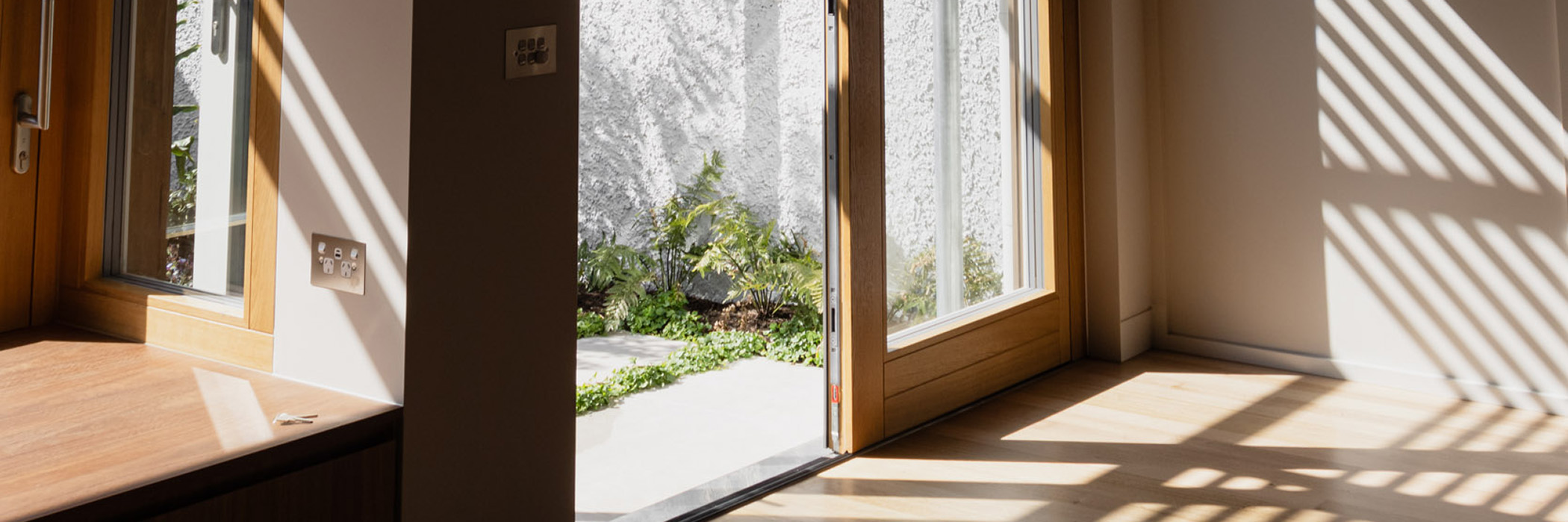
Why combining design intent and verified performance matters
Passivhaus (Passive House) and passive solar design are often discussed as if they are alternatives. One is framed as a rigorous performance standard, the other as a climate-responsive design philosophy.
In practice, this framing is unhelpful. The two address different aspects of how buildings perform and are most effective when used together.
Confusion arises when design intent is mistaken for delivered performance, or when performance standards are treated as a substitute for good design.
What passive solar design sets out to do
Passive solar design is concerned with how a building interacts with its climate.
It typically focuses on:
- Orientation and solar access
- Window placement and shading
- Thermal mass
- Natural ventilation
These strategies aim to reduce heating and cooling demand by working with local conditions rather than against them.
When executed well, passive solar design can significantly improve comfort and energy efficiency. However, its success depends heavily on assumptions about how the building will be constructed and used.
What Passivhaus addresses differently
Passivhaus is a performance framework, not a design approach.
It sets measurable limits for:
- Heating and cooling demand
- Airtightness
- Thermal comfort
- Energy use
Crucially, these limits are verified through modelling and on-site testing. This shifts the focus from intent to outcomes.
Passivhaus does not prescribe a particular architectural response. It requires that whatever design is chosen performs as modelled once built.
For context on how these outcomes are delivered on site, see The Airtight Case for Passivhaus.
Where the gap often appears
Passive solar principles can be undermined if construction does not deliver what the design assumes.
Common issues include:
- Air leakage that bypasses intended ventilation paths
- Insulation gaps and thermal bridges
- Inaccurate window installation
- Poor junction detailing
None of these are design failures. They are delivery failures.
This is why homes with good passive solar intent can still perform poorly in practice.
For a grounding in why these details matter, see Building Physics Made Simple.
Why combining both works better
When passive solar design and Passivhaus principles are combined, each compensates for the limitations of the other.
Passive solar design:
- Reduces energy demand through climate-responsive form
- Improves daylight and connection to place
Passivhaus:
- Verifies that performance targets are met
- Controls air movement and heat loss
- Reduces reliance on occupant behaviour
Together, they create buildings that are both well designed and reliably delivered.
The builder’s role in bridging intent and outcome
Builders do not control orientation or window placement, but they play a decisive role in whether those decisions work as intended.
Construction quality determines:
- Whether airtightness targets are achieved
- Whether insulation remains continuous
- Whether shading and glazing perform as specified
- Whether ventilation systems operate predictably
This is where collaboration between architects and builders becomes critical. Performance intent must be translated into buildable details and protected through construction.
This relationship is explored further in Client Benefits of Architect–Builder Collaboration in Passivhaus Construction.
Climate change raises the stakes
As Australian climates become more extreme, assumptions embedded in passive solar strategies are increasingly tested.
Higher summer temperatures and longer heatwaves increase overheating risk. Buildings that rely solely on orientation and mass without controlling air leakage and heat transfer are more vulnerable under these conditions.
This is why performance verification frameworks such as Passivhaus are becoming more relevant, not less.
For a discussion of this risk, see Designing for Overheating in a Warming Climate.
Design intent still matters
Passivhaus is sometimes misunderstood as dismissing design. In reality, it demands more from it.
A poorly considered design will struggle to meet performance targets. A well-considered design that is then delivered with discipline performs consistently and predictably.
Passive solar design provides the architectural intelligence. Passivhaus provides the verification.
Performance depends on delivery
Treating passive solar design and Passivhaus as competing approaches misses the point.
Passive solar design shapes how a building responds to climate. Passivhaus verifies whether that response performs as intended. When the two are aligned, performance becomes reliable rather than assumed.